
Intelligent network control Digital twin puts O2 mobile network on autopilot
13.10.2025
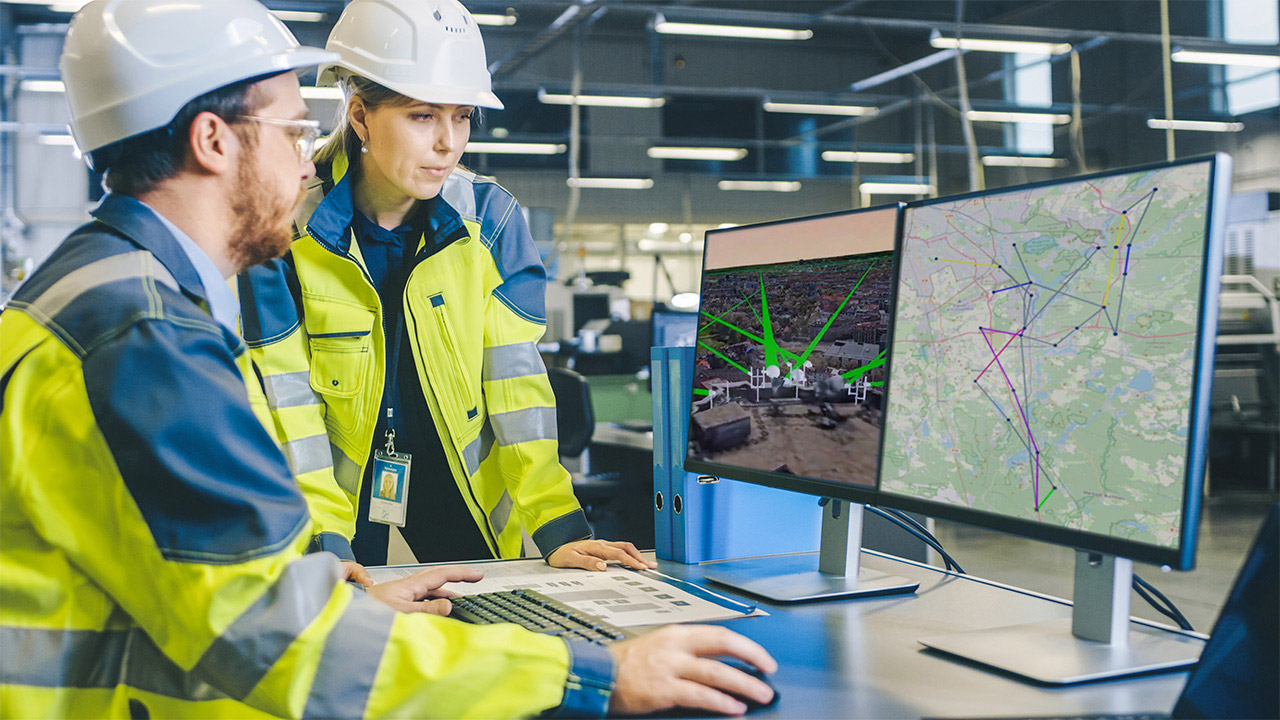
The digital twin of the O2 network assists technicians with planning and optimization (Credits: iStock / gorodenkoff, O2 Telefónica)
- Internally developed software makes the mobile network smarter, faster, and more robust
- Highly automated network sets new industry standard: automation level 4 in accordance with international telecommunications standards achieved
- Up to 80 percent faster analyses and optimized capacities ensure an optimal customer experience
- Network structure and signal patterns can now also be simulated realistically as 3D models, for example via virtual reality glasses
Telecommunications company O2 Telefónica has reached an important milestone in the fully automated optimization of its mobile network. The digital twin of the O2 network is an internally developed software that maps all components of the network in real time. This twin can now optimize itself almost independently. The system simulates data flows, detects bottlenecks, and automatically suggests optimization measures. The network thus runs largely in autopilot mode.
“Our digital twin is the brain of our network automation. The more intelligently our network operates, the better it becomes – and that's exactly what our customers benefit from in their everyday lives,” says Mallik Rao, Chief Technology and Enterprise Business Officer at O2 Telefónica.
The digital twin controls most processes completely independently. It not only responds to disruptions, but can also prevent them proactively. Specialists only intervene in exceptional cases. The digital twin thus meets all the requirements for a highly automated network – known as automation level 4. This level is based on international industry standards for the telecommunications industry (TM Forum; see below). “With this new stage of development, we can analyze network conditions in a fraction of the time it used to take and can plan and respond much more proactively. The move to Level 4 is a key milestone on our path to fully autonomous network operation,” says Mallik Rao.

Mallik Rao
Self-control through AI Digital twin automatically detects and fixes problems
The digital twin of the O2 Telefónica network maps all 28,000 mobile sites and over 50,000 transport connections in real time – from microwave links and fiber optic cables to IP routers. The new level of automation that has now been implemented brings noticeable improvements to network operation:
- Thanks to AI, analysis processes related to planning, operation, and optimization can be carried out up to 80 percent faster. At the same time, the risk of errors in configuration and operation is reduced, as many processes run in the background in a standardized and precise manner.
- Capacity planning also becomes significantly more efficient: Thanks to the rapid calculations of the digital twin, the number of mobile communications sites with temporary bottlenecks is reduced by 90 percent, and by 40 percent in the transport network.
- Network response times are improving measurably – automatic simulation enables O2 Telefónica to optimize the routes of mobile signals. Latency is reduced by an average of five percent.
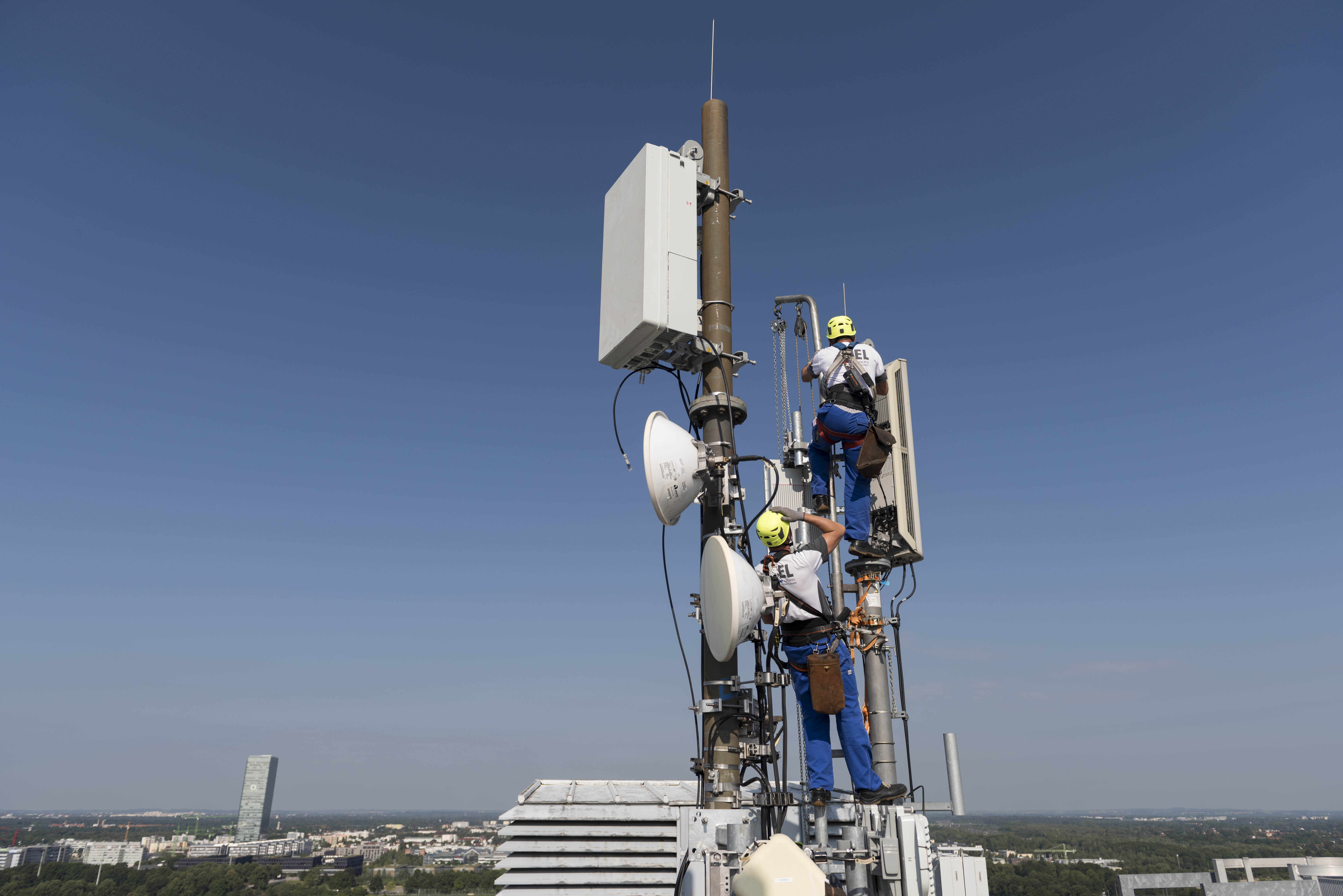
Network technicians from O2 Telefónica install a mobile communications site in Munich (Credits: O2 Telefónica)
3D model for the whole of Germany in development
Video in German – Die Netzwerker: How Bernhard Walther's team now analyzes mobile phone locations in real time


Network planners will soon have access to a 3D model of the nationwide mobile network: O2 Telefónica is working on creating a 3D view of the entire O2 network, including all network components. This will allow planned changes, such as to the height of an antenna or a microwave link, to be simulated directly in a 3D model. The new 3D view also helps to simulate structural changes or site planning in a realistic manner. In the future, it would be possible for network planners to use virtual reality glasses, for example, to see whether an obstacle—a hill or a tree—could interfere with signal transmission.
The technical basis for this is provided by the company's internal “Autonomous Network Journey” program, which bundles and specifically develops all automation expertise in network operations. “By reaching Level 4, O2 Telefónica is taking on a pioneering role in the European telecommunications market and in the global Telefónica Group,” says Mallik Rao. “This makes us proud as a team in Germany – but at the same time, it obliges us not to slacken in our efforts to enable as many people and companies as possible to participate digitally and to make our contribution to digital sovereignty in Europe.”
TM Forum Industry Standard Level 4
The TM Forum is a global industry association of companies from the IT and telecommunications industry, with over 850 member companies from more than 70 countries. The TM Forum's Autonomy Levels define the stages of network automation – from simple processes (Level 0) to fully autonomous systems (Level 5). Level 4 represents a highly automated network with minimal human intervention.
Downloads

Mallik Rao - portrait
JPG | 11 mb