Our 5G Network
5G expansion – faster than ever
Our private and business customers benefit equally from 5G in the O2 network and from new 5G applications. In the Industry 4.0, we enable flexible production and logistics processes with 5G.

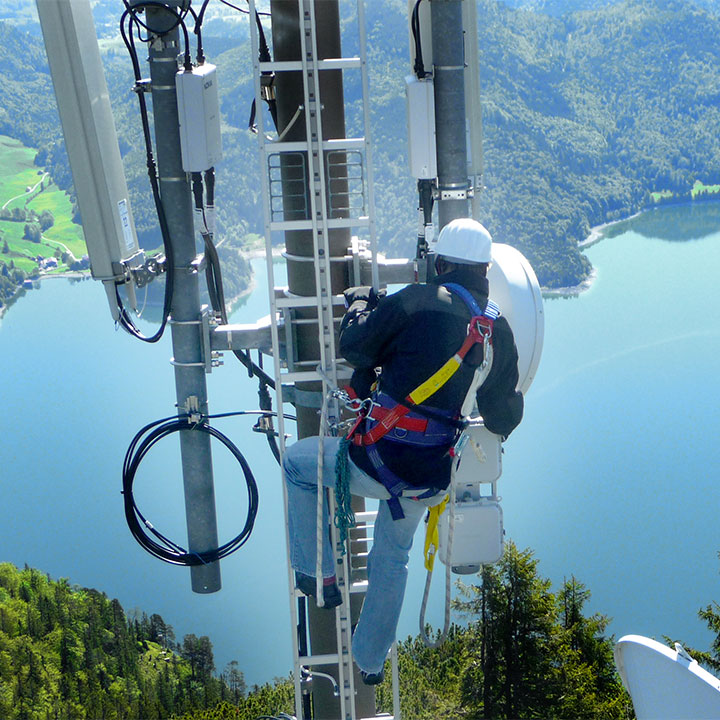
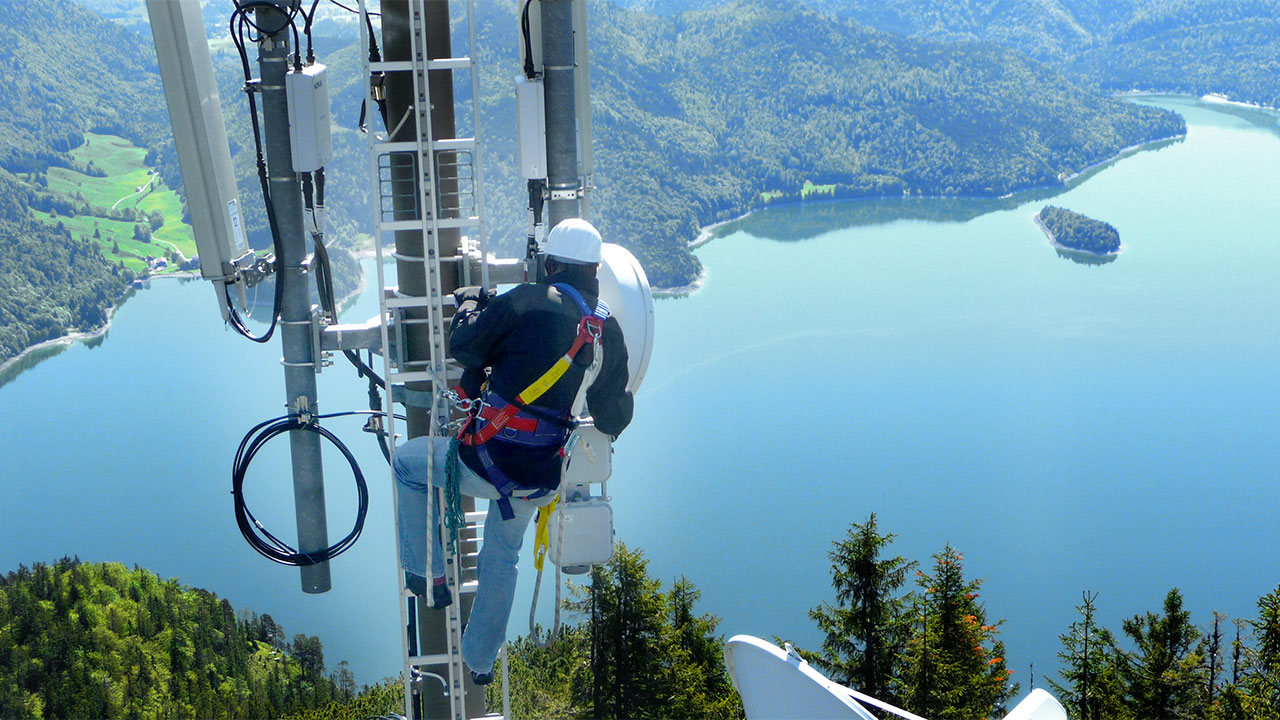
Germany must be among the leaders when it comes to digitalization. To this end, Telefónica Germany is accelerating the rollout of the 5G standard. 5G network coverage is more than 99 percent of the population (as of June 2026). 5G Standalone (5G+) is available across the entire network, meaning that 5G SA coverage is also more than 99 percent – just a few years after the network launch in October 2020. No other mobile technology has been rolled out as quickly as this. The goal is to provide 5G coverage throughout Germany.
5G as a driving force for commercial data usage
A 5G mast can provide fast internet for up to a million devices in a square kilometer. This makes 5G a central factor in handling the masses of mobile data, which continue to grow exponentially. 5G plays a particularly important role in city centers or at major events such as the Oktoberfest. Applications such as smart factories, Industry 4.0, telemedicine, autonomous driving and augmented reality also benefit enormously from 5G.
5G creates new tech ecosystems
Network equipment providers, cloud providers and technology companies are working closely together on 5G. New ecosystems are emerging that view digital connectivity between customers, networks and applications more strongly as a single unit. This new way of thinking enables groundbreaking developments and applications for industry and private customers.
5G is becoming more flexible
With the 5G expansion, Telefónica Germany has created the basis for the networking of the future. An important pillar is the cloud transformation, which affects the entire network from the core to the antenna. In addition to the first cloud-based 5G core network (“5G Cloud Core”), Telefónica Germany is also testing cloud-based antenna technology, known as Cloud RAN.
5G continues to develop
Network slicing and standardized interfaces provide a boost to the development of the 5G network. With Open Gateway and open APIs, the network is becoming a programmable supercomputer for the first time, making it easier to develop applications. This increases convenience and security for private customers and enables new applications such as the reliable control of drones for the delivery of parcels or medicines in smart cities.
5G becomes more efficient and scalable
With the introduction of 5G RedCap, Telefónica Germany is creating a new basis for particularly resource-efficient IoT networking. The technology enables high-performance connections for devices with medium data requirements – significantly more energy-efficient and cost-effective than conventional 5G solutions. A key element is the optimised device category, which allows for longer battery life and reduces hardware costs.
“The 5G decade is picking up speed”

“With the launch of the 5G network and its rapid expansion, Telefónica Germany has started a new era in mobile communications. In just four years, we have provided the country with modern 5G. The necessary infrastructure is in place. Many customers are already benefiting from the technology – but this is just the beginning. The 5G decade is now picking up speed. We are continuously developing the network. We are harnessing the power of 5G, artificial intelligence and the cloud to offer our customers new applications, higher speeds and shorter response times, taking digitalization in the country to a new level.”
Mallik Rao, Chief Technology & Enterprise Officer
5G takes business customers to a new level

As a digital full-service provider, O2 Business offers a wide range of telecommunications solutions beyond traditional mobile communications offerings - from mobile services and internet solutions to cloud & security, Internet of Things and 5G campus networks.
Our 5G areas of application
Mobile Broadband
The demand for mobile data usage is increasing
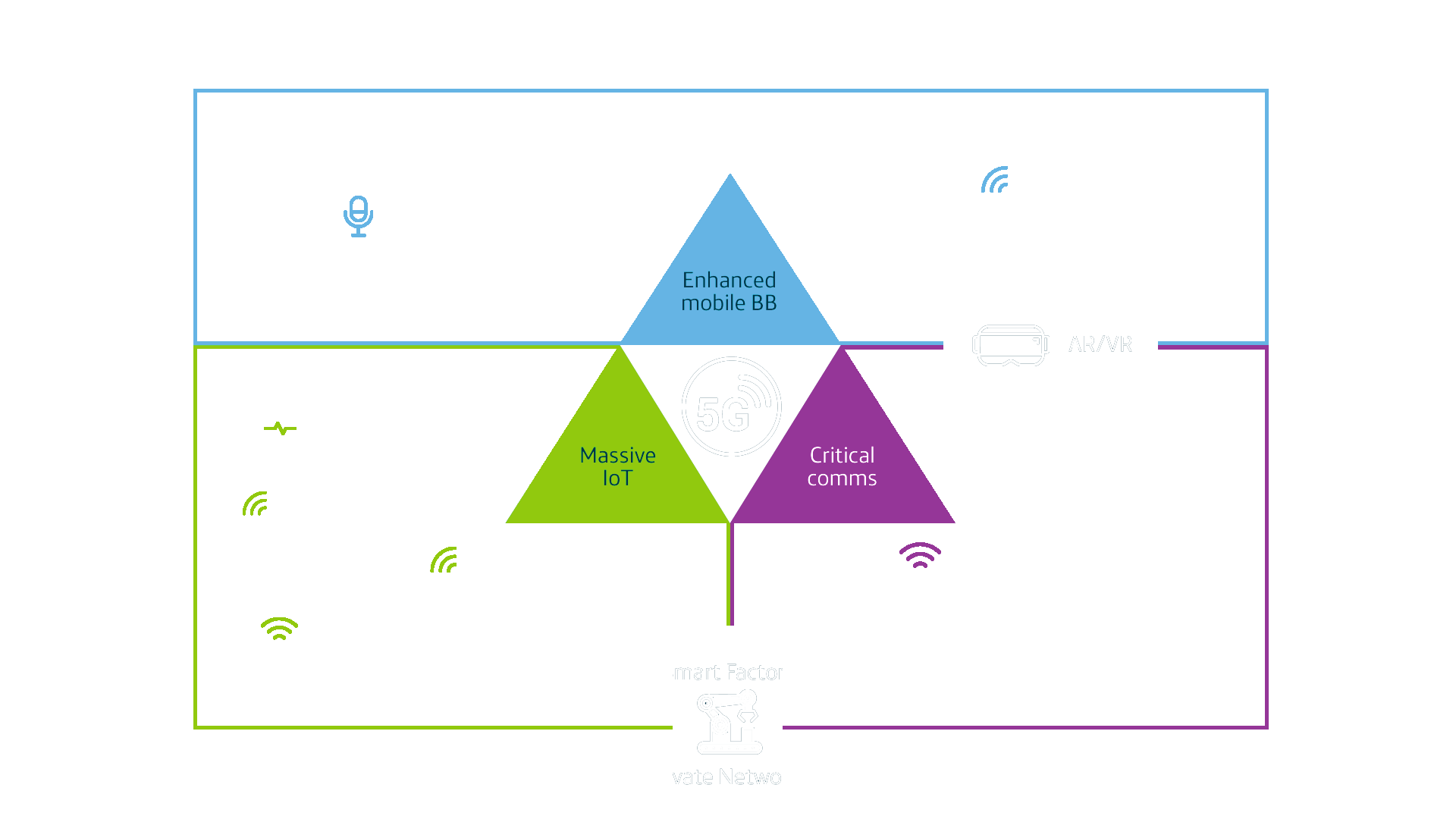
With 5G, the O2 network can once again achieve significantly higher data transmission rates, especially in conjunction with LTE (4G), which will continue to form the backbone of the network infrastructure. With 5G, customers download large files in seconds. With 5G, they have access to higher usage speeds as well as another high-speed network in addition to LTE. This is where the technical term for enhanced mobile broadband (eMBB) comes from.

In addition to standard data services, 5G allows applications such as virtual reality (VR) and augmented reality (AR) to develop their full potential in private and commercial use. It makes no difference whether customers use mobile devices such as smartphones and tablets or will rely on “DSL via radio” - i.e. Fixed Wireless Access - in the future. Telefónica Germany has already successfully demonstrated how customers with Fixed Wireless Access will be able to use a high-performance fixed network alternative via the 5G mobile network (mmWave) in the future.
Real-time applications
Short response times are decisive
5G enables ultra-fast latencies of less than 1 millisecond in conjunction with edge computing. For the first time, applications can be implemented in real time. Due to highest reliability and extremely short reaction times, 5G is an important support for highly sensitive, automated production processes as well as for networked driving.

Vehicles, road users and road infrastructure such as traffic lights or bicycles communicate with each other in real time (V2X communication), which can prevent accidents and save lives. In addition, Telefónica Germany can bring the “Smart Factory” to life with 5G and drive forward the digitalization of companies. It makes no difference whether companies want to use the nationwide network infrastructure, a separately secured network slice or even a stand-alone campus solution.
Internet of Things (Massive IoT)
Networking millions of devices
With modern IoT solutions, Telefónica Germany enables automated data transfer between objects and machines. The company offers customers the two network standards Narrowband IoT and LTE-M. With 5G, intelligent networking via the Internet of Things is once again experiencing a much wider range of applications. This is referred to as “Massive IoT” - the networking of millions of devices with each other.

With 5G, not only private end devices such as Smartwatches and Fitness Trackers are networked. Cities are becoming “smart cities”, where networked devices help us in our everyday lives. Smart metering supports the automatic reading of electricity, gas and water consumption, for example. In addition, entire branches of industry such as logistics are benefiting from networking their fleets and vehicles. For individual fields of application, Telefónica Germany can even provide its customers with a separate network infrastructure by means of Network Slicing, thus reducing the complexity of the network.
Network news
29.06.2026
29.06.2026
Faster Mobile Networks Telefónica Deutschland implemented 4,500 network expansion projects in the first half of the year
23.06.2026
23.06.2026
AI for networks Telefónica Deutschland and Blue Planet demonstrate how AI agents can accelerate 5G network slicing service design