

30.07.2025
Quarterly results: Customer growth across segments confirms O2 Telefónica’s course in the second quarter

- Telecommunications provider gains 184,000 mobile contract customers and 177,000 additional machine cards
- Rapid expansion of the network and innovative concepts enable further enhanced services for consumers and the economy
- Sales and EBITDA reflect temporary effects in partner business and support the company’s transformation with a solid core business
With an excellent value-for-money ratio, telecommunications provider O2 Telefónica Deutschland performed well in the second quarter of 2025. The company gained 184,000 mobile contract customers in its traditionally strong private customer business. In addition, customer growth is fueled by successes in the business customer segment and new or expanded partnerships.
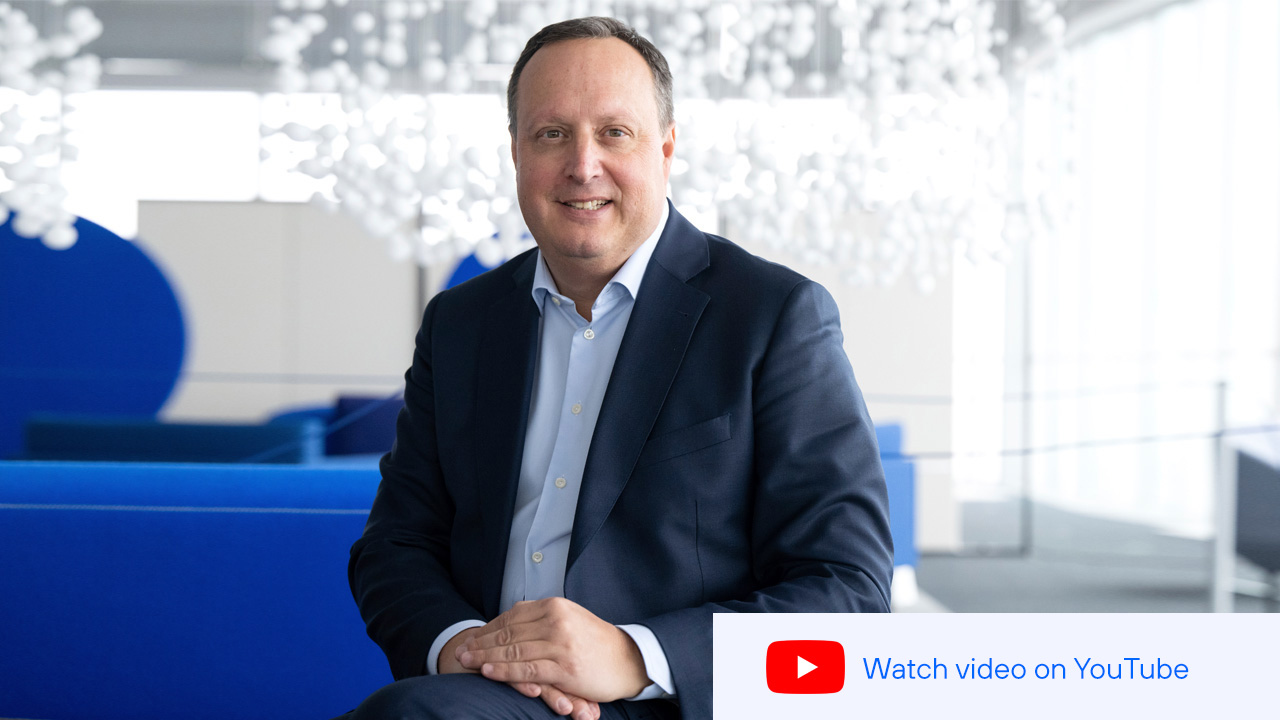
“From consumers to business customers and partners: We are seeing solid demand for O2 Telefónica services across all segments. This is reflected in the number of new mobile contract accesses and the sustained positive revenue trend in the fixed-line business. We are building on a very good network*, which we are constantly improving for our customers. With a future-oriented transformation of the business model, O2 Telefónica is on course for profitable future growth”, says Markus Haas, CEO of O2 Telefónica.
O2 Telefónica’s customer growth in the second quarter is reflected in revenue and EBITDA, while customer migration in the partner business is having a weighing on financial trends. As a result, total revenue declined by 2.4 percent and mobile service revenue by 3.4 percent year-on-year in the past quarter. Fixed service revenue continued to develop positively with an increase of 0.7%.
O2 Telefónica remains customer magnet in mobile communications

In a highly competitive environment, the company once again gained 184,000 mobile phone contract customers
In an increasingly saturated market environment, the company added 184,000 contract customers in the second quarter of 2025 - another 20,000 more than in the first quarter of the year. Despite intense competition, the company kept the average revenue per user (ARPU) of the core brand O2 broadly stable year-on-year.
At the same time, the trend of strong growth in the dynamic machine-to-machine (M2M) communication segment is continuing. An increase of 177,000 IoT connections represents an increase of around 47% compared to the same period last year. The future prospects in this segment are also promising: O2 Telefónica has cooperation agreements in the energy sector, as well as partnerships in the automotive sector and in the water industry with partner Siemens. New major customers are creating further growth potential for networking solutions in the business customer segment. Most recently, a major European retailer opted for solutions from O2 Business. The services of O2’s business customer segment have received numerous awards for their value-for momeny ratio and customer service.
Revenue affected by transformation and market trends
Operating revenue amounted to EUR 2.040 billion in the second quarter. The momentum in the core business shows positive growth trends, while the expected transformation of the partner business is weighing on mobile service revenue performance in the short term. Overall, operating revenue was 2.4% below previous year's figure. Revenue from mobile services (service revenue) amounted to EUR 1.394 billion (down 3.4%). Growth in the fixed-line network business continued: revenues increased by 0.7% year-on-year to EUR 215 million. This was driven by the trend towards higher-value connections. The handset business recorded revenues of EUR 412 million (down 3.7% year-on-year). Here, the market trend towards longer replacement cycles and, in contrast to the fixed-line business, restrained consumer behavior is continuing.
Earnings before interest, taxes, depreciation and amortization (EBITDA), adjusted for exceptional effects, amounted to EUR 626 million, 5.9% below previous year's figure. The temporary effects of customer migration are also evident here. In contrast, further efficiencies from outsourced services and the increasing use of artificial intelligence are increasingly contribution to EBITDA.
Rapid progress in network expansion
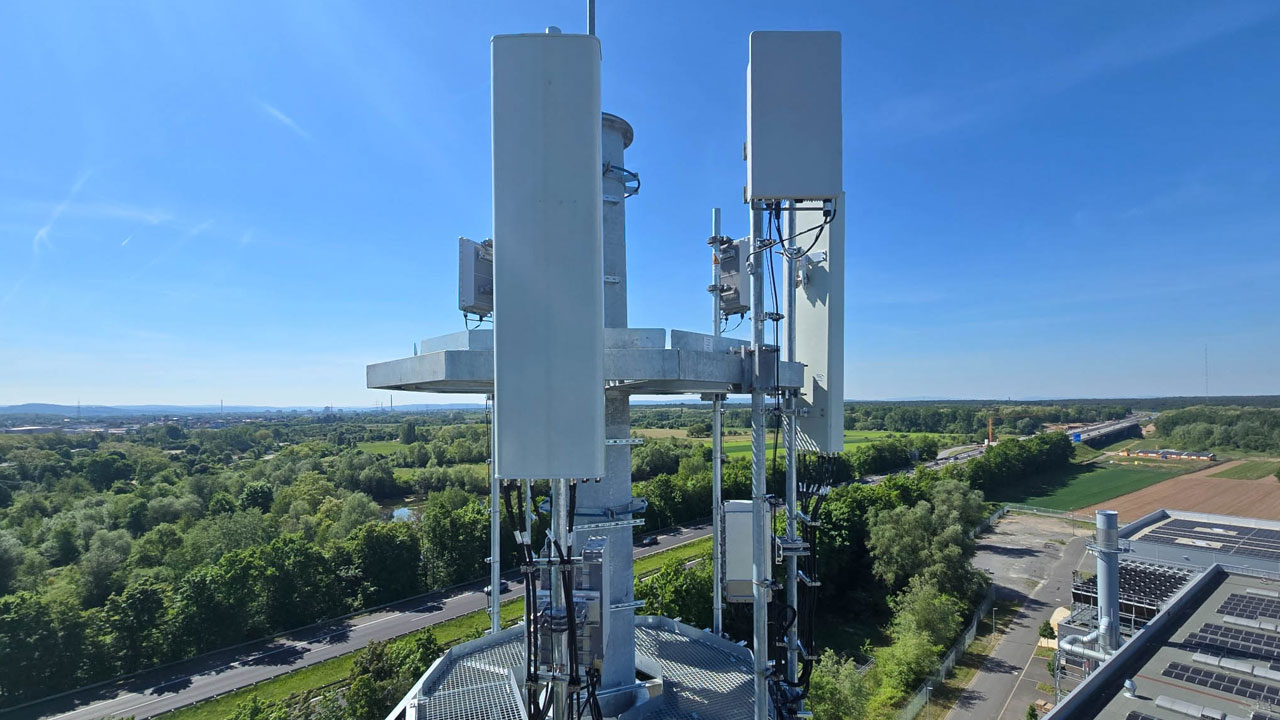
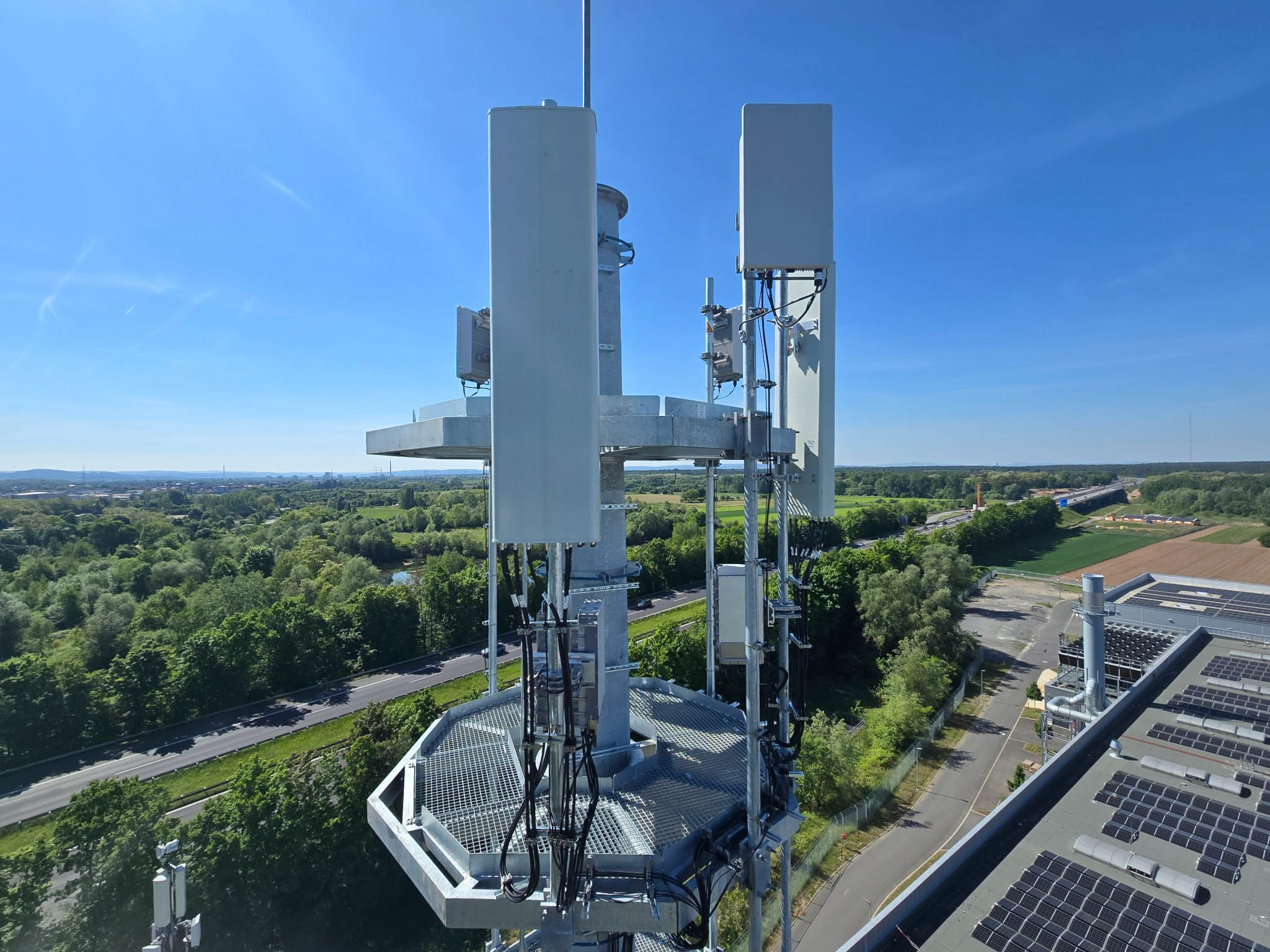
O2 Telefónica put 200 new mobile communications sites into operation in the first half of the year ()
Capital expenditure (CapEx) amounted to EUR 204 million in the second quarter. The company is thus continuing its sustained high pace of network expansion: In the first half of 2025, O2 Telefónica built and commissioned a new mobile network site every day. More than 200 new sites expand coverage, especially in rural areas. At the same time, the company has activated more than 1,000 new 5G transmitters and now covers 98% of the population with the fast mobile communications standard. The expansion is complemented by innovative solutions such as 5G transmitters in streetlights, which are being used in more and more cities and optimize network performance in metropolitan areas. In total, the company has implemented 3,500 measures since January to further enhance its mobile network.
With its high number of active network sites and excellent 5G availability, the company is better represented in Germany than almost any other mobile network operator; only one competitor is slightly better. In the latest network comparison of Europe's largest countries conducted by the “connect” magazine, O2 Telefónica's network secured a top 3 position out of 26 networks tested in Europe. “Our network performs very well in both national and international comparisons. The quality of our network is very good, and Germany is also a country with an overall very well-developed mobile network for the population and the economy”, says CEO Markus Haas.
Strong networks as the basis for digitalization and digital sovereignty
The performance of the networks is a central building block for further digitalization and on the path to greater digital sovereignty in Germany. “Digital policy is social and economic policy. Once the overriding public interest in network expansion has been defined, policymakers and regulators must take further steps to ensure that the industry’s annually growing investments in expansion have a lasting impact. To achieve this, we need simplifications in construction law, bureaucratic relief and a long-term frequency policy”, appeals Markus Haas.

| * | connect Mobilfunk- und 5G-Netztest, issue 01/2025: “sehr gut” (909 Punkte) for O2; awarded were a total of: 2x “sehr gut” (924 und 909 Punkte) and 1x “überragend” (970 Punkte). Further informationen at o2.de/netz |
| O2 Telefónica is a leading full-service provider of telecommunications services for private and business customers. The portfolio of the core brand O2 and various secondary and partner brands includes traditional telephony and internet connections as well as innovative digital services in the area of the Internet of Things and data analysis. In mobile communications, O2 Telefónica serves 34.7 million mobile lines (as of June 30, 2025, excluding lines of third-party network operators). The company is a leading mobile provider in the consumer market and in the market for innovative partner offers, as well as a fast-growing provider in the solutions business for corporate customers. The company's high-performance, award-winning mobile network reaches more than 99% of the population. In the fixed network, O₂ Telefónica offers its customers leading technological diversity and geographical availability in Germany. In the 2024 financial year, the company generated revenue of 8.5 billion euros with around 7800 employees. The company is majority-owned by the Spanish telecommunications group Telefónica S.A. based in Madrid, one of the largest telecommunications groups in the world. | |